Introduction
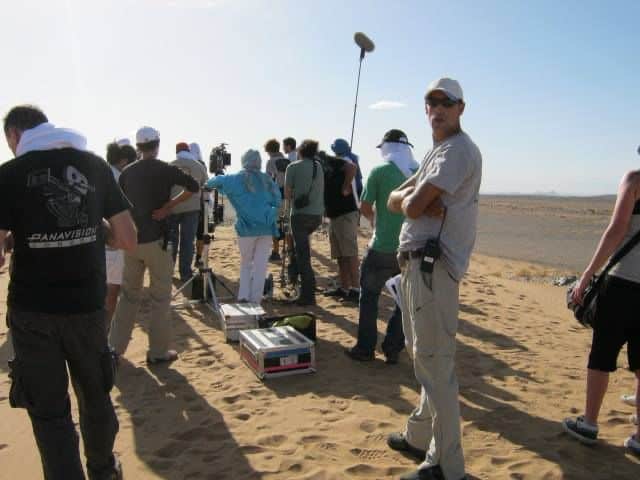
Hoodlum delivers exceptional film fixer services in Morocco, offering comprehensive support to international production teams. With extensive experience, we excel in handling logistics such as location scouting, obtaining permits, and connecting you with reliable local crews, ensuring your project runs seamlessly. Morocco, known for its stunning desert landscapes, vibrant cities, and rich cultural heritage, is a prime location for filmmakers. Whether you’re producing a commercial, feature film, TV series, or documentary, Hoodlum’s dedicated local team will ensure your production is handled with precision and care.
Planning a film project in Morocco? Let Hoodlum manage the logistics—from permits to locations—so you can focus on bringing your creative vision to life. Contact Hoodlum today to learn how we can make your Morocco production a success.
Country Overview:
Located at the crossroads of Europe, Africa, and the Middle East, Morocco is a vibrant North African nation known for its rich cultural heritage, diverse landscapes, and strategic geographic positioning. Bordered by the Atlantic Ocean and Mediterranean Sea, and with the towering Atlas Mountains and sweeping Sahara Desert within its territory, Morocco offers an extraordinary array of filming environments and travel experiences.
Bordering Countries:
Morocco is located in North Africa, with a unique geographical position. To the north, it is bordered by Spain, separated by the Strait of Gibraltar. To the east lies Algeria, and to the south, it shares borders with the disputed territory of Western Sahara. Morocco’s proximity to both Europe and sub-Saharan Africa has made it a historical and cultural crossroads, influencing its diverse landscapes and cultural heritage.
Main Cities:
Morocco is home to several vibrant cities, each offering unique filming opportunities:
- Fes: Known for its well-preserved medieval architecture and ancient medina, Fes provides a historical backdrop for period films.
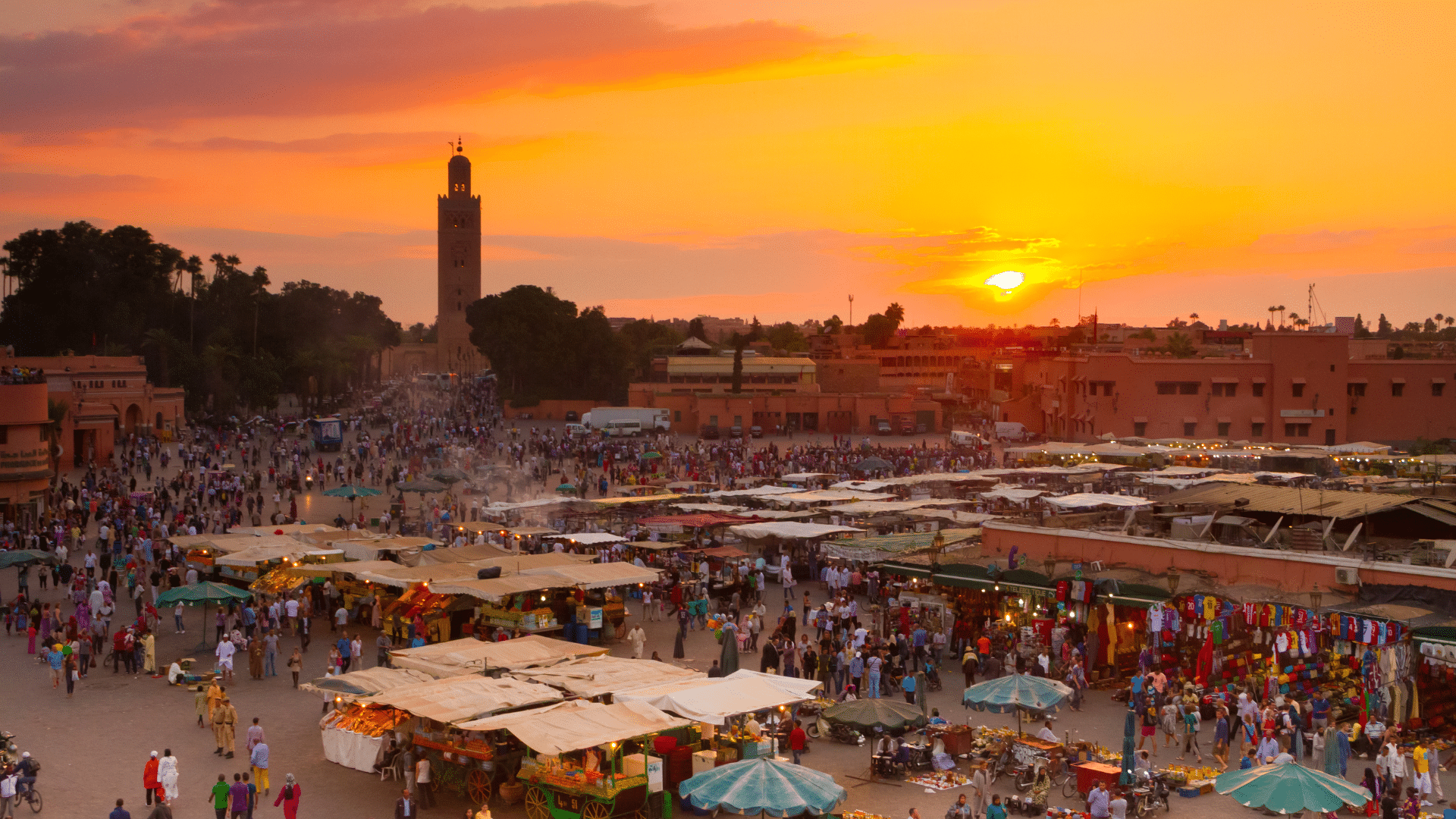
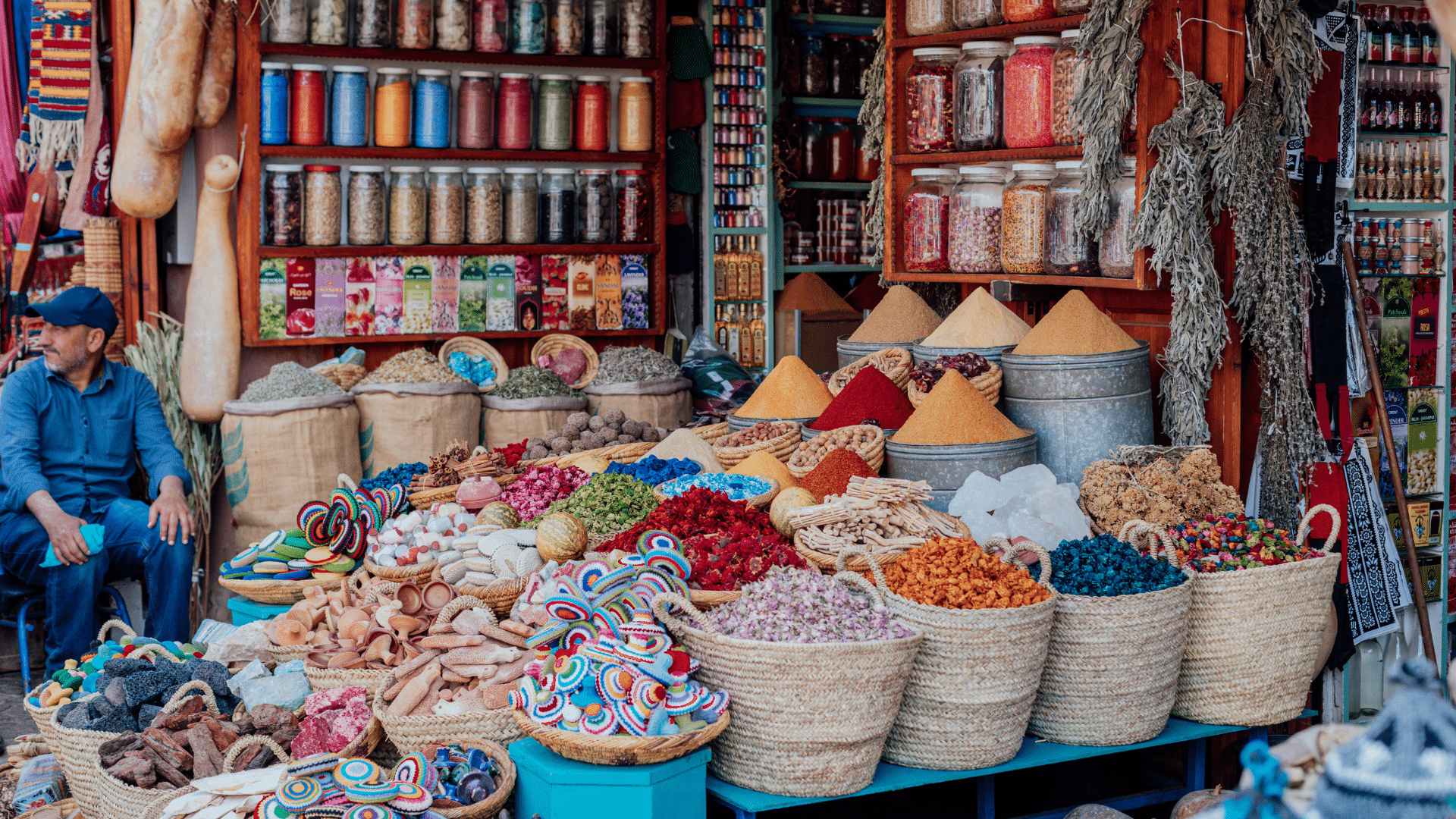
- Marrakesh: Famous for its bustling souks, palaces, and gardens, Marrakesh offers a rich, colorful setting for various film genres.
- Rabat: The political and administrative capital, Rabat has a blend of modern infrastructure and historic sites.
- Casablanca: Morocco’s largest city and economic hub, Casablanca combines modern skyscrapers with traditional neighborhoods, ideal for contemporary and period pieces alike.
- Tangier: Located on the northern coast, Tangier boasts Mediterranean beaches and a multicultural atmosphere.
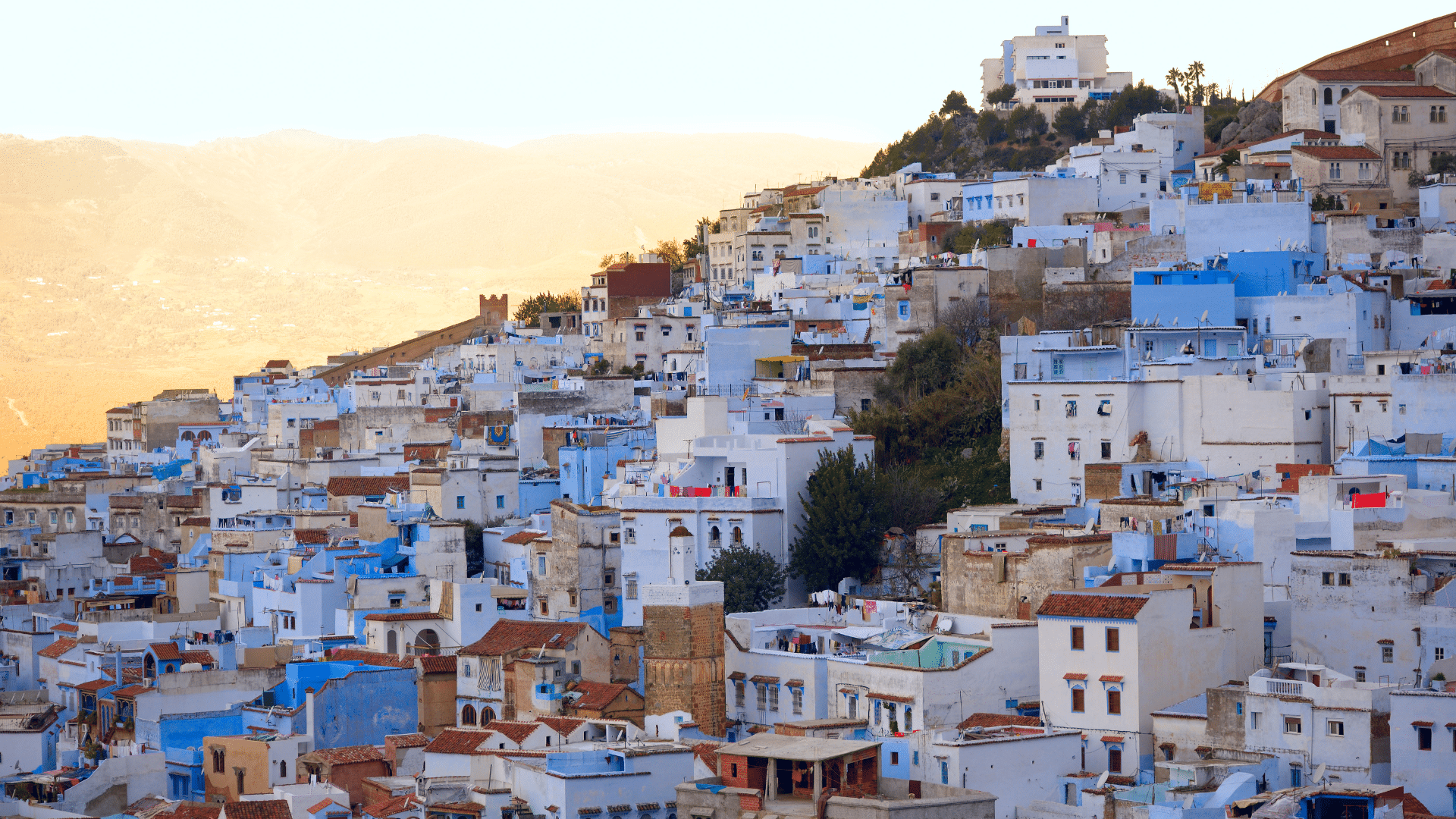
- Meknes, Essaouira, Tetouan, and Agadir: These cities each have their distinct architectural styles and landscapes, from coastal towns to mountainous regions, perfect for diverse filming needs.
Local Languages:
Morocco’s official languages are Arabic and Standard Moroccan Berber. French is also widely spoken, particularly in business and government, which can be helpful when coordinating international film productions.
Local Currency:
The local currency is the Moroccan Dirham (MAD). Productions can easily convert currencies, and most cities have access to major banking services, making financial transactions relatively straightforward.
Climate:
Morocco’s climate is diverse, influenced by both the Atlantic Ocean and the Mediterranean Sea, as well as the Sahara Desert to the south.
- Winter (November to January): Winter is the coldest and wettest season, with snow in the Atlas Mountains and rain in northern regions.
- Summer (June to August): Summer can be extremely hot, especially inland, with temperatures reaching above 40°C (104°F) in desert regions. Coastal areas tend to be more moderate. These seasonal variations offer opportunities to film everything from snowy mountain scenes to scorching desert vistas.
Visa Requirement
General Requirement:
Depending on nationality, some countries require visas for entry into Morocco. It’s advisable to check with the Moroccan embassy or consulate in your country before travel. Visa policies vary, so this is an essential step when planning international film productions.
Required Documents:
- Valid passport
- Recent passport-sized photos
- Flight itinerary or travel plans
- Other supporting documents as required by the specific Moroccan consulate
Processing Time:
Visa processing times vary depending on the applicant’s country of origin, ranging from a few days to several weeks.
Cost:
Visa costs differ by nationality and visa type. The exact fees can be requested directly from the Moroccan embassy or through visa services.
Note:
For more information on visa requirements, visit VisaHQ – Morocco.
International Crew Accreditation (FIVA LETTER)
Accreditation Requirements:
In Morocco, international crew accreditation is generally not required, making it easier for foreign crews to enter and work in the country.
Required Documents:
Not applicable.
Processing Time:
Not applicable.
Cost:
Not applicable.
Note:
Morocco does not mandate international crew accreditation, simplifying the logistics for foreign film crews.
General Film Permit
Issuing Organization:
Film permits in Morocco are issued by two primary bodies:
- For Fashion & Photoshoots: The Ministry of Culture, Department of Communication.
- For All Video Projects (e.g., commercials, documentaries, feature films): The Moroccan Cinematography Center (CCM).
Timings:
- Documentaries: Permits take approximately 15 working days to process.
- Commercials, Music Videos, Corporate Films, Short & Feature Films: Typically processed within 5 working days.
Required documents for Documentary Filming:
Requires submission of the title, synopsis, TV broadcasting letter, shoot schedule, broadcast date, crew list with positions, copies of crew passports, and equipment list.
Required documents for Commercials and Feature Films:
The required documentation can be found on the CCM webpage: CCM – Film Permits.
Cost:
Fashion & Photoshoots and Documentaries: Free and for other projects, specific fees apply, as listed on the CCM website: CCM – Fees.
Private Locations
Location Scouting and Agreement:
For private locations, agreements and permits are arranged upon request, depending on the type of production and specific location requirements.
Cost:
Fees for private locations vary based on the location and scope of the shoot.
Drone Permit
Drone Importation Regulations:
Bringing foreign drones into Morocco is possible but involves a complex procedure, which typically takes two months to complete. The process requires that the film permit be issued prior to drone importation.
Permit Issuance:
Permits for drone use are issued by local authorities, varying by region in Morocco.
Application Requirements:
Requirements for drone applications vary based on the specific location of the shoot. Local drones are available upon request, simplifying the permit process.
Timings:
- Local Drone Permits: Typically processed within 10 days.
- Importation of Foreign Drones: The process takes about two months.
Cost:
Drone permit fees depend on the location, the number of shoot days, and the type of drone used. The permit cost is usually included in the overall daily shooting fees.
Equipment Customs Clearance
Carnet Country Status:
Yes, Morocco is a Carnet country, meaning the ATA Carnet system is accepted for the temporary importation of professional equipment.
Customs Clearance Process:
ATA Carnet should be applied for in the country of origin to streamline customs clearance when bringing equipment into Morocco.
Required Documents:
ATA Carnet, as well as specific importation permits for certain equipment, such as walkie-talkies.
Clearance Issuance:
Handled by the Moroccan customs authorities.
Timings:
Varies depending on the equipment and documentation involved.
Important Note:
Some specialized equipment may require additional permits.
Safety and Security
General Overview:
Morocco is a very safe country to film in, with a welcoming environment for international productions. The country’s stability and proactive approach toward tourism and filmmaking make it an attractive destination for global film projects.
Security Requirements:
While Morocco is generally safe, security can be arranged upon request, tailored to the needs of each production, especially for high-profile projects or those filming in remote areas.